
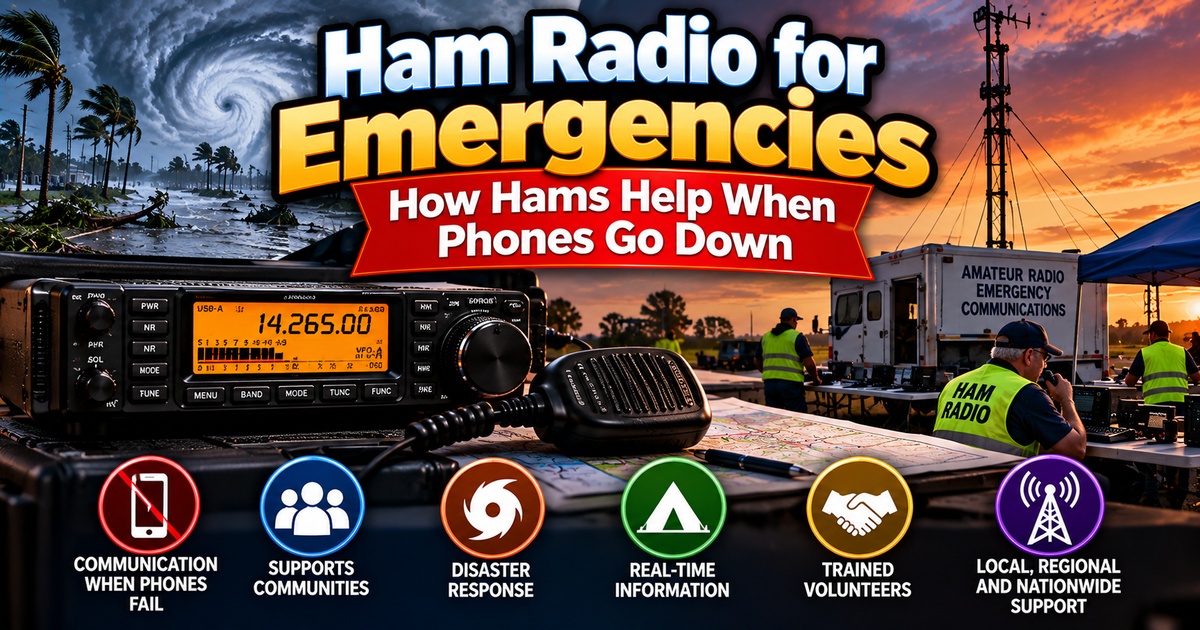
Cell phones, internet and landlines are amazing until the moment they fail. A hurricane, a major power outage or a damaged tower can silence them for hours or days. When that happens, ham radio keeps working. That is the core idea behind ham radio for emergencies.
Coastal South Jersey knows this risk well. Many residents still remember the long outages after Hurricane Sandy in 2012. This post explains why amateur radio is so reliable, how organized groups use it, and how you can prepare. It also invites you to train with the Atlantic Coast United Radio Association (ACURA) before the next storm.
Why Phones Fail in a Disaster
Modern phone systems depend on a long chain of equipment. Cell towers need commercial power, backup batteries and fiber links. If any link breaks, service drops. In addition, networks often overload when thousands of people call at once.
Ham radio works differently. Two hams with battery-powered radios can talk directly, with no tower and no network in between. Local repeaters extend that range, and many have backup power. On HF, stations can even reach other states with nothing but a wire antenna. As a result, hams can pass messages when other systems go quiet.
How Ham Radio Helps During Emergencies
Hams do not replace police, fire or EMS radio systems. Instead, they support them. Licensed volunteers fill communication gaps for emergency managers, hospitals, shelters and relief agencies.
ARES: Amateur Radio Emergency Service
ARES is a program of the ARRL, the national association for amateur radio. Local ARES groups train volunteers to support served agencies such as emergency management offices and the Red Cross. During an event, ARES operators may staff shelters, relay health-and-welfare messages, or link hospitals together.
RACES and AUXCOMM
RACES, the Radio Amateur Civil Emergency Service, works directly with government emergency management. AUXCOMM is a newer framework for auxiliary communicators who support public safety. Both rely on trained, credentialed volunteers who know the procedures before a crisis begins.
SKYWARN Storm Spotting
SKYWARN is the National Weather Service’s volunteer spotter program. Trained spotters report hail, flooding, damaging winds and other conditions. Many spotters are hams, because radio lets them report even when phones are down. Those ground-truth reports help forecasters issue more accurate warnings.
What Hams Actually Do During an Event
Emergency work is usually less dramatic than people imagine. Most of it is careful, patient message handling.
For instance, a shelter may need to request cots, medicine or water. A ham at the shelter writes the request on a standard form, often the ICS-213 general message. Then, the operator reads it over the air to a net control station. Another ham copies it word for word and delivers it to the emergency operations center. Accuracy matters more than speed, so operators spell names phonetically and confirm numbers.
Other operators may shadow officials, report road flooding or relay health-and-welfare checks for worried families. In every case, the goal is the same: move clear information to the people who need it.
Ham Radio Nets for Emergencies: Practice Makes Perfect
An emergency is the wrong time to learn how a net works. That is why hams practice every week.
Here in Atlantic County, the AUXCOMM and SKYWARN practice net meets on Mondays at 8:00 pm Eastern. It runs on both the SCARA and ACURA repeaters. ACURA also holds its weekly club net every Thursday at 7:00 pm on any of our linked repeaters. Both nets welcome new operators. If you have never checked in, our guide on how ham radio nets work explains what to say.
During hurricanes, national nets also activate. For example, the Hurricane Watch Net operates on HF and gathers reports from areas in a storm’s path. You can listen for it on our free SDR Receiver, which tags the net when you tune to its frequency.
How to Prepare Your Ham Radio for Emergencies
You do not need an expensive setup to be useful. Instead, you need a reliable setup that works without commercial power. Here is a simple checklist.
- A dependable radio. Any dual-band handheld is a fine start, and a mobile radio adds range.
- Backup power. Charge spare batteries now. Even a small deep-cycle or lithium battery can run a mobile radio for many hours.
- A better antenna. Even a roll-up antenna hung from a tree can greatly extend a handheld’s range.
- Programmed frequencies. Load local repeaters, simplex channels and net frequencies ahead of time.
- A printed frequency list. Your phone and computer may not be available, so keep a paper copy.
- A go-kit bag. Pack the radio, batteries, chargers, a notepad, pens, a flashlight and snacks.
Above all, test everything before you need it. Check into a net using only battery power. That is the best way to find weak spots in your plan.
Planning for Your Family
Emergency communication starts at home. Agree on a family plan before storm season. Decide where to meet, who to call, and how you will share updates.
For example, some families pick an out-of-state contact. Long-distance calls and text messages sometimes get through when local calls fail. Similarly, licensed family members can monitor a repeater at set times each day. Write the plan down and keep a copy in your go-kit.
Hurricane Season in Coastal South Jersey
The Atlantic hurricane season runs from June 1 through November 30. However, the peak often arrives in late summer and fall. Nor’easters can also bring flooding and outages to Atlantic County well into winter.
So, now is a good time to review your gear. Replace old batteries, update your frequency list and check your antenna connections. Also, keep an eye on local conditions with our weather page and our SKYWARN weather page.
Ham Radio Training for Emergencies
Good intentions are not enough during a disaster. Served agencies need volunteers who know the procedures and can follow directions.
Fortunately, training is widely available. FEMA offers free online Incident Command System courses that many emergency groups require. The National Weather Service holds SKYWARN spotter classes, often free and online. Local ARES and AUXCOMM teams also run drills and exercises throughout the year. Ask ACURA members which courses they recommend for your goals.
Ham Radio for Emergencies Starts With a License
To transmit, you need an FCC amateur radio license. The Technician exam is the first step, and it is very achievable with a few weeks of study. ACURA’s Volunteer Examiners hold test sessions in Galloway Township. Our guide on how to get your ham radio license in New Jersey walks you through the process. After that, our guide to the best beginner ham radios will help you choose a dependable first radio.
Still deciding between services? Read our comparison of ham radio vs GMRS vs CB. It explains why ham radio offers the most options when other systems fail.
Join ACURA Before the Next Storm
Ham radio for emergencies works best when operators know each other and practice together. That is exactly what ACURA offers. Our members train on the air every week, support public service events and help newcomers build reliable stations.
Check into our Thursday night net, join the Monday AUXCOMM and SKYWARN practice net, or visit our testing schedule to get licensed. You can also contact the club with questions. When the phones go down in South Jersey, we want you ready to help.
Leave a Reply